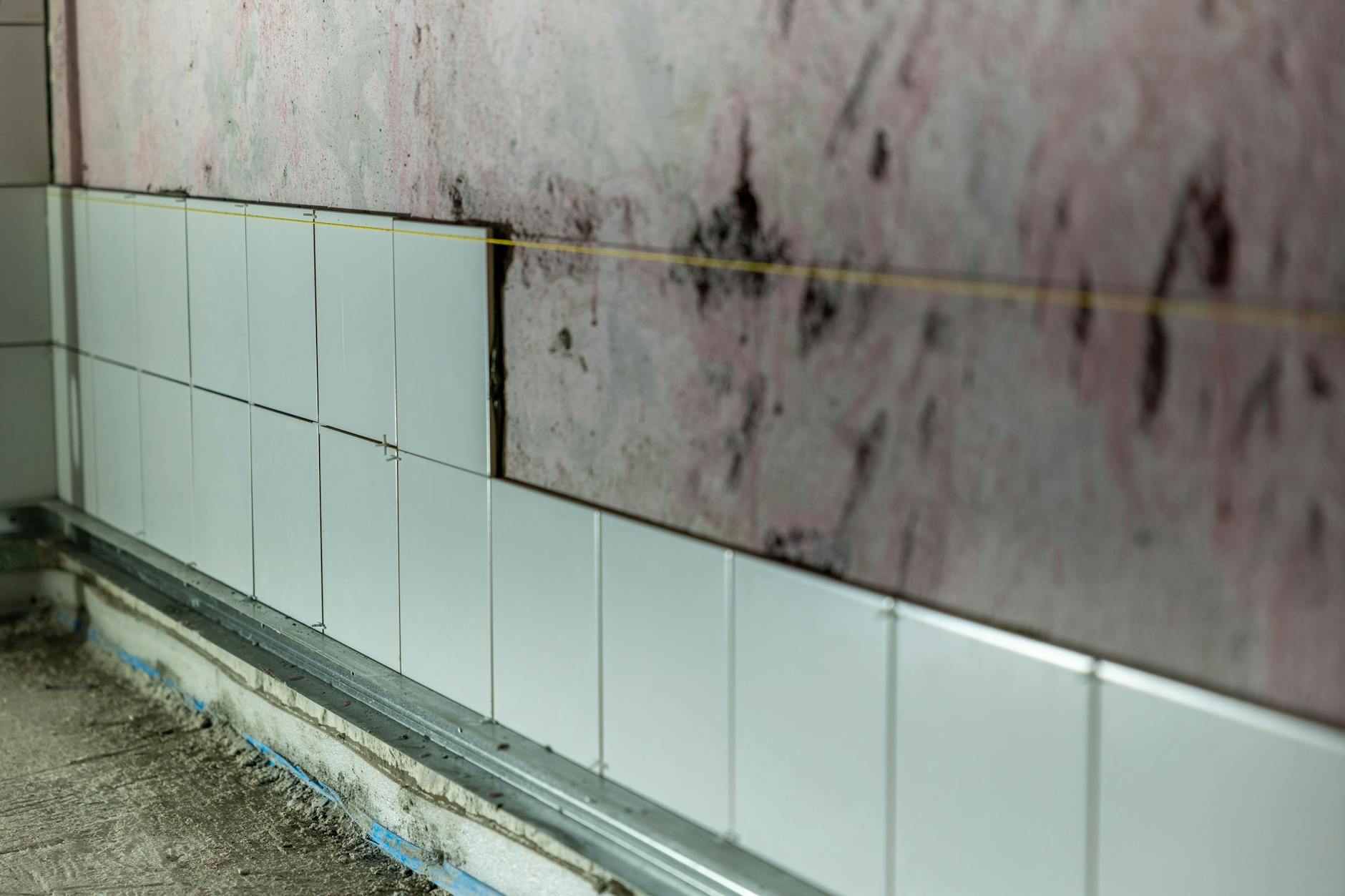
Floor wall tiles are often sold in the same aisle, shown in the same lookbooks, and finished in styles that feel interchangeable. That similarity is misleading. A tile's intended surface shapes everything: its material density, its slip rating, its glaze thickness, and how it holds up to weight, water, and daily contact. Getting the distinction right before you buy saves money and avoids failures that show up months later.
Why floor and wall tiles aren't the same thing
The clearest difference is load rating. Floor tiles carry foot traffic, furniture legs, and in commercial settings, trolleys and pallets. Manufacturers rate porcelain and ceramic floor tiles using the PEI scale (Porcelain Enamel Institute), which runs from Class 1 (bare feet only, think decorative wall use) to Class 5 (heavy commercial). A wall tile skips that rating entirely because it never needs it.
Wall tiles are typically thinner and lighter. That's a feature, not a deficiency. A thinner tile is easier to hang on a vertical surface using standard adhesive, and the reduced weight puts less stress on the substrate. Install a heavy, thick floor tile on a wall without adjusting your adhesive and fixing method, and the bond can fail.
Glaze behaviour differs too. Floor tiles use a matte or textured glaze that grips underfoot. Wall tiles often carry a high-gloss finish that reflects light and looks striking on a vertical surface, but would be dangerously slippery on the floor. If you're drawn to a gloss tile, check where it's rated to go before you commit.
Choosing the right tile for floors
Porcelain is the most reliable floor tile material available. It's dense, absorbs almost no water (below 0.5% porosity in most full-body porcelain), and resists scratches from grit tracked in on shoes. Ceramics of Italy sets widely referenced industry standards for porcelain production that many manufacturers benchmark against. For interior floors in residential settings, a PEI Class 3 tile handles most living areas. Kitchens and entryways benefit from Class 4.
Size matters on floors in a very practical way. Large-format tiles (600x600mm and above) create a cleaner visual field and mean fewer grout lines to clean. The trade-off: your subfloor needs to be flat to within 3mm over a 3-metre span, or lippage (one tile edge sitting higher than the next) becomes visible and a trip hazard. Smaller tiles, including mosaics on a mesh backing, tolerate more subfloor variation because the joints absorb minor movement.
Slip resistance is non-negotiable in wet areas. In Australia, the relevant standard is AS 4586, which classifies tiles by wet pendulum test results. Bathrooms and laundries need at least a P3 classification, and outdoor areas typically require P4 or P5. A tile's look and its safety rating are separate considerations. Check both.
Choosing the right tile for walls
Wall tiles carry less structural obligation, which frees up the design options considerably. Zellige handmade tiles, thin terracotta slabs, glass mosaic sheets, and ultra-thin porcelain panels (some as thin as 3mm) all work on walls in ways they couldn't on floors. The limiting factors shift to weight, moisture resistance, and adhesion rather than load capacity.
In wet wall applications like showers and splashbacks, a tile's water absorption rating still matters. Ceramic wall tiles typically absorb between 3% and 18% of their weight in water. That's fine behind a properly sealed, regularly maintained grout joint, but it means the installation detail (waterproof membrane, correct grout, sealed edges) carries more responsibility than it does with low-absorption porcelain. For anyone choosing bathroom tiles, matching the tile's absorption class to the exact zone of the room (wet zone, splash zone, dry zone) is one of the decisions that determines how long the installation holds up.
Grout joint width on walls is usually narrower than on floors. A 2mm rectified joint on a wall-mounted large-format tile looks sharp and minimises the visual interruption between tiles. On the floor, a wider joint (3mm+) provides a small amount of movement accommodation and makes the slip-resistant texture of the grout work harder.
Can you use floor tiles on walls, and vice versa?
Floor tiles on walls: generally yes, with caveats. The extra weight requires appropriate adhesive coverage and, on large tiles, back-buttering (spreading adhesive on both the tile and the substrate). A structural engineer's input is worth getting if you're tiling a full-height wall with heavy large-format floor tiles. The result, when done properly, is a durable and seamless finish that runs the same material from floor to wall without visual interruption.
Wall tiles on floors: almost never a good idea. The thinner body is more likely to crack under load, and the smoother glaze creates a slip risk that no amount of careful selection fully eliminates. There are rare decorative exceptions, such as a feature strip inset into a floor as a border, where the strip carries no meaningful foot traffic. Outside that narrow use case, don't use wall tiles underfoot.
Matching tiles across surfaces for a cohesive look
The strongest interiors tend to use one or two tile families, not a different product on every surface. Manufacturers often release coordinated floor and wall tiles in the same visual range: matching tones, complementary textures, or the same print in two different finishes. Buying from within a coordinated range makes it easier to run a continuous material from a floor up a feature wall or into a niche without an obvious join.
Finish contrast is a reliable design tool. A matte floor tile paired with a gloss version of the same colour on the wall creates depth without pattern clash. The reverse, a textured wall tile with a smoother floor in a similar tone, works particularly well in bathrooms and kitchens where the wall surface needs to be easy to wipe down. Chase Tiles stocks coordinated ranges specifically for this kind of floor-to-wall continuity, so it's worth exploring complementary options together rather than treating floor and wall as separate purchases.
One practical note on colour matching: tile batches vary in shade between production runs, even within the same product line. Order floor tiles and wall tiles at the same time from the same batch wherever possible. If you need to reorder later, the shade difference between an original batch and a new one can be visible, and on a wall it's more obvious than on a floor where furniture and lighting create visual noise.